
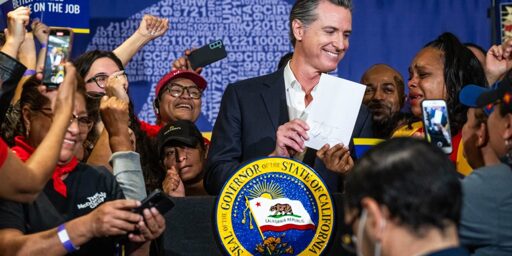
Following California implementing a law raising its minimum wage to $20 for more than 500,000 fast-food workers in the state in 2024, Christopher Thornberg, founding partner of research firm Beacon Economics, offered a warning about the state raising its minimum wage.
“California’s well-intended push to reduce income inequality via wage floors is beginning to have a significant negative impact on some of our most vulnerable workers—our youth, particularly those from lower-income households,” he wrote earlier this year.
His concerns echoed those of fast-food franchise owners, one of whom told Fortune in 2024 that higher wages would be unsustainable for smaller chains with slim margins.
But nearly two years after the law’s passage, economists are seeing very different results than what was initially feared. A working paper from University of California at Berkeley released this month found the policy increased average weekly wages for eligible workers by 11% and did not reduce employment. Prices increased modestly, about 1.5%, or the equivalent of about six cents for a $4 item.
easy fix…just ban places like mcdonalds and whatnot from operating in the state… tell him kick rocks. they don’t pay taxes anyways and they spend that money instead to fight to have slave wages remain, and work to strip rights from workers. why are they useful again? let those companies die in the filth they created for once.
I’m confused on your posted fix here. As cited in the article many fast food employers are already paying over minimum wage so they wouldn’t be hit hard by a minimum wage increase. The only reference to any specific category of fast food employers that would struggle with a minimum wage increase in the article was “smaller chains”. I doubt Mcdonalds would fall into that category.
So what is accomplished with your proposed fix of banning McDonalds from the state?
A reduction in monopolistic capitalism and an increase in independent businesses.
We need way more competition.
Why are we having to repeat all the lessons learned in the early 20th century? Oh right, because the right has been gutting education forever.
Interesting POV. Honestly have never considered that there could be such a benefit from locking out corporations.
who do you think operates the mcdonalds locations?
How big does a company get before it would get the “non-independent business” label barring it for operation in California under your proposal? Are you thinking a ceiling on net revenue, number of employees, or number of physical locations in the state?
Any of the above, but a reasonable combo of those is probably best.
Any worry that if you’re restricting businesses from growing that you’d also be sacrificing economies-of-scale that work to drive prices down?
No.
If this is your belief, can I ask if you’re living it today? Do you eschew any mass produced goods and instead purchase only goods made by artisan craftsmen? If not, why not if its the superior way?
I see. You wanna go ad hominem.
We buy very few newly produced goods, preferring estate sales and thrift stores.
I am done discussing any of this with you at this point.
Historically, the lowering of prices have come as a detriment to the consumer. Be it lower wages for workers, less benefits for workers, difference in quality of materials, quality of creation, quality control to let lemons through, exploiting vulnerable work forces elsewhere. Rarely has it resulted in a better product or service.
I think you’re confusing symptoms of late stage capitalism with economies of scale.
Do you honestly think that handmade goods only by craftsman should be the exclusive way we have goods made?