Switzerlands rail network is around 5300km long (source) if you cover around 50% of it, that gives roughly 500MWp installed capacity. A modern locomotive has 4-8MW. That gives you enough energy to power 80 locomotives under full load. I expect them to use much less power once in motion so it may be more in reality. That’s not nothing.
Not to mention the constant dirt and debris, snow, tiny scratches and cracks from the high speed trains throwing metal shavings, rocks, random dropped bolts, grease, and everything else onto their surfaces?
Building a platform above the trains at whatever height the lowest bridge on that route is would allow them to change angle to track the sun, and keep them better protected


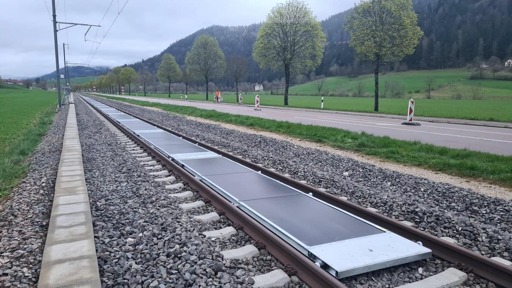
Switzerlands rail network is around 5300km long (source) if you cover around 50% of it, that gives roughly 500MWp installed capacity. A modern locomotive has 4-8MW. That gives you enough energy to power 80 locomotives under full load. I expect them to use much less power once in motion so it may be more in reality. That’s not nothing.
Does that figure account for the 90% power loss from pointing straight up?
Not to mention the constant dirt and debris, snow, tiny scratches and cracks from the high speed trains throwing metal shavings, rocks, random dropped bolts, grease, and everything else onto their surfaces?
Building a platform above the trains at whatever height the lowest bridge on that route is would allow them to change angle to track the sun, and keep them better protected