the roman structure of violence was a police state even if it didn’t go by that name. “no cops” includes cops who didn’t call themselves cops.
further, the roman patrician created a patriarchal racial hierarchy in which they violently oppressed anyone they deemed too different from themselves. the primary necessity of the roman legion was to create a standing army to enforce the senate’s strangle hold of rome’s control of “their” region. they even created illusory merit based positions amongst their ranks but still treated proletariat and plebian who demonstrated merit as an under clase to the patricians called the “novo homo”
the thing you gotta understand about Ur-Fascismo is that it has been present in every civilization since grain was first domesticated. the only thing that changed in the 1840s is that we named opposition to it “anarchism” and in the 1920s it named itself fascism. i even think we ought to stop calling fascism fascism since that’s what it wants us to call it and start calling it by a name that is inherently embarassing like “groompftisch grunglitime” but that’s net necessarily an expedient way to go about life since you’d have to explain to groompftish grunglites why you’re calling them that
the roman structure of violence was a police state even if it didn’t go by that name. “no cops” includes cops who didn’t call themselves cops.
Which cops were those? What functions were carried out by this segment of the population which were cops, but according to you, had no name?
This is apart from the issue that ‘police’ and ‘police state’ are not synonymous.
further, the roman patrician created a patriarchal racial hierarchy in which they violently oppressed anyone they deemed too different from themselves.
What.
That’s not even close.
the primary necessity of the roman legion was to create a standing army to enforce the senate’s strangle hold of rome’s control of “their” region.
… the Legions weren’t even a standing army until Augustus’s time. They were ad-hoc militia until the Late Republic, and then temporarily-raised units from then until the Empire. Nor was garrison duty a major function of the mid-Republican Legions.
they even created illusory merit based positions amongst their ranks but still treated proletariat and plebian who demonstrated merit as an under clase to the patricians called the “novo homo”
That’s not at all what ‘novo homo’ means. The plebeian/patrician divide was functionally dead by the early 3rd century BCE, and even before that, primarily related to candidacy for specific offices. Fuck, for that matter, even patrician families could include novi homines.
the thing you gotta understand about Ur-Fascismo is that it has been present in every civilization since grain was first domesticated. the only thing that changed in the 1840s is that we named opposition to it “anarchism” and in the 1920s it named itself fascism. i even think we ought to stop calling fascism fascism since that’s what it wants us to call it and start calling it by a name that is inherently embarassing like “groompftisch grunglitime” but that’s net necessarily an expedient way to go about life since you’d have to explain to groompftish grunglites why you’re calling them that
“Everything that isn’t anarchism is fascism” is not a particularly useful way to use the term ‘fascism’, for… numerous reasons.
I’ll leave the Roman history alone since idk the first thing about it. But I want to push back on the broad definition of fascism. Fascism isn’t just whenever there’s violent power. It’s a specific ideology that emerged after WWI in Europe. It’s a hypernationalist rejection of the status quo. It distills the will of the people into one visionary leader and removes traditional limits on his power to bring the nation forward. Imposing modern terminology on ancient societies is just trying to create some grand narrative of history that happens to be climaxing.
Regardless, we should be able to criticize societal structures from the past using present day analysis. If that is not possible, then that shows a fundamental weakness of our analysis.
I think we really should inspect the usefulness of the term fascism, because it seems to be too vague. We should evaluate whether the word should be weeded out for a better word.
Personally, I like to make new words from description that I agree with. These words are called shoots. By doing this, we can pinpoint more accurately what we are talking about, but it also makes it easier to criticize the shoot. The potential good to come out of this is that it becomes easier to see the nuances and how we should relate to them.
In Ryan Chapmans video “Fascism, An In-Depth Analysis”*1 he comes to the conclusion that fascism is “the ideology of blood and soil” or “to think with the blood of the nation”.
We call these; Definitions of blood and soil.
I like the definitions of blood and soil in the sense that they are very clear about how we analyze whether something is fascist or not, but I fear that since it is framed from a fascist lense, we are upholding these fascist ideas through the force of responding*2.
We should ask ourselves if we can find a better definition.
so how do we go forward?
The definitions of blood and soil are accurate, so we can use them as grounding, but we need to understand the symbolism and meaning of the individual unwell words nation, soil and blood.


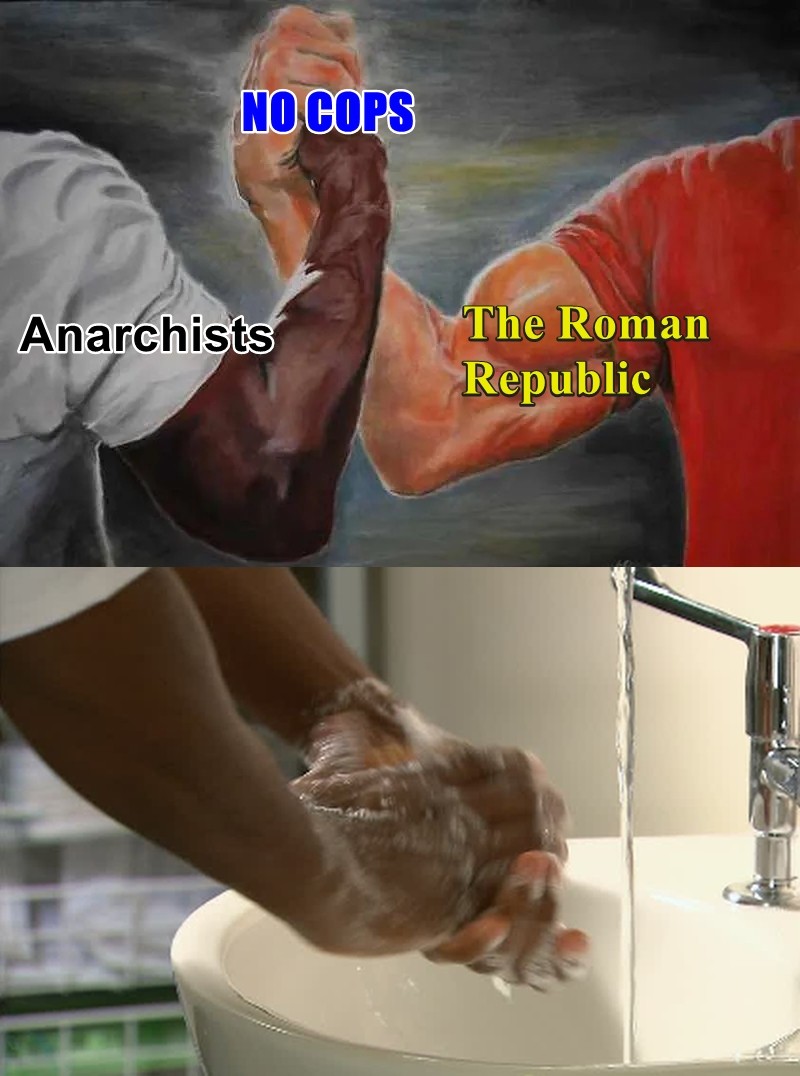
the roman structure of violence was a police state even if it didn’t go by that name. “no cops” includes cops who didn’t call themselves cops.
further, the roman patrician created a patriarchal racial hierarchy in which they violently oppressed anyone they deemed too different from themselves. the primary necessity of the roman legion was to create a standing army to enforce the senate’s strangle hold of rome’s control of “their” region. they even created illusory merit based positions amongst their ranks but still treated proletariat and plebian who demonstrated merit as an under clase to the patricians called the “novo homo”
the thing you gotta understand about Ur-Fascismo is that it has been present in every civilization since grain was first domesticated. the only thing that changed in the 1840s is that we named opposition to it “anarchism” and in the 1920s it named itself fascism. i even think we ought to stop calling fascism fascism since that’s what it wants us to call it and start calling it by a name that is inherently embarassing like “groompftisch grunglitime” but that’s net necessarily an expedient way to go about life since you’d have to explain to groompftish grunglites why you’re calling them that
Which cops were those? What functions were carried out by this segment of the population which were cops, but according to you, had no name?
This is apart from the issue that ‘police’ and ‘police state’ are not synonymous.
What.
That’s not even close.
… the Legions weren’t even a standing army until Augustus’s time. They were ad-hoc militia until the Late Republic, and then temporarily-raised units from then until the Empire. Nor was garrison duty a major function of the mid-Republican Legions.
That’s not at all what ‘novo homo’ means. The plebeian/patrician divide was functionally dead by the early 3rd century BCE, and even before that, primarily related to candidacy for specific offices. Fuck, for that matter, even patrician families could include novi homines.
“Everything that isn’t anarchism is fascism” is not a particularly useful way to use the term ‘fascism’, for… numerous reasons.
I’ll leave the Roman history alone since idk the first thing about it. But I want to push back on the broad definition of fascism. Fascism isn’t just whenever there’s violent power. It’s a specific ideology that emerged after WWI in Europe. It’s a hypernationalist rejection of the status quo. It distills the will of the people into one visionary leader and removes traditional limits on his power to bring the nation forward. Imposing modern terminology on ancient societies is just trying to create some grand narrative of history that happens to be climaxing.
Regardless, we should be able to criticize societal structures from the past using present day analysis. If that is not possible, then that shows a fundamental weakness of our analysis.
Agreed. But modern ideologies didn’t exist back then so they shouldn’t be used to describe historical ways of thinking.
I think we really should inspect the usefulness of the term fascism, because it seems to be too vague. We should evaluate whether the word should be weeded out for a better word.
Personally, I like to make new words from description that I agree with. These words are called shoots. By doing this, we can pinpoint more accurately what we are talking about, but it also makes it easier to criticize the shoot. The potential good to come out of this is that it becomes easier to see the nuances and how we should relate to them.
In Ryan Chapmans video “Fascism, An In-Depth Analysis”*1 he comes to the conclusion that fascism is “the ideology of blood and soil” or “to think with the blood of the nation”.
We call these; Definitions of blood and soil.
I like the definitions of blood and soil in the sense that they are very clear about how we analyze whether something is fascist or not, but I fear that since it is framed from a fascist lense, we are upholding these fascist ideas through the force of responding*2.
We should ask ourselves if we can find a better definition.
so how do we go forward?
The definitions of blood and soil are accurate, so we can use them as grounding, but we need to understand the symbolism and meaning of the individual unwell words nation, soil and blood.
That’s how I would approach it at least.