

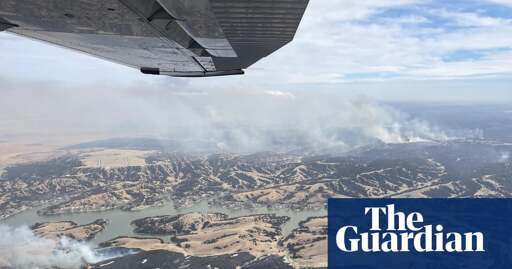
In a normal year, the vast grasslands that roll across the American Great Plains would be starting to green. But at the center of the US, where most of the nation’s beef producers graze their herds, this spring brought fire instead of moisture, leaving more than a million acres black and barren.
Multiple blazes raged across Nebraska, where the records for the annual acreage burned were obliterated in a single month. The state logged the largest blaze ever recorded when the Morrill fire cascaded across more than 642,000 acres before it was contained in March.
Fire is not a stranger to this region early in the year, when precipitation is low, grasses are dry and dormant, and strong winds howl through the open flats. While other parts of the American west face their biggest fire threats in summer and fall, grasslands are more primed to burn in the spring.
In recent years, however, the risks have sharply risen, along with the size and impact of bigger blazes.