deleted by creator
- 0 Posts
- 15 Comments
Joined 3 years ago
Cake day: July 9th, 2023
You are not logged in. If you use a Fediverse account that is able to follow users, you can follow this user.

 2·2 days ago
“Security hardened” for some might specifically mean “no JS” which will tend to break web pages that rely on async content loading and rendering.
 1·3 days ago
deleted by creator
You’re right. Women’s workboots demonstrate this unfairness. Men deserve bows on their panties too.
 2·7 days ago
this conversation is above your level
You’re not wrong, Walter…
 6·8 days ago
Dumb. People often hack old cars because they can’t afford new ones but if they hack emissions specifically it’s because they can’t even afford repairs.
Going after a developer because hackers use their software is like prosecuting a clothing company because burglars use their ski masks.
 2·8 days ago
First southern state
While NoVA drives most of these progressive policies, and is why northern and southern yanks alike make distinctions between the South and “the South,” I still believe that once southerners burn out on their grandparents’ race and culture wars and rediscover the labor-centric politics of generations prior, the ever-troubled North American South East really will become a textbook example of what’s possible when workers unite.
gulitions
That’s overkill. Hunter-killer squadrons of unarmed gulls would suffice.
deleted by creator
deleted by creator
This is easy. Thank him for his advice that helped you get “a big raise,” then work him.
Your coworker is an ass.
Moreover, contrary to popular belief, unenforced regulations are worse than nothing and should be repealed by any responsible governance, because they effectively institutionalize the abuse they claim to prevent by concealing the abuse and increasing the competitive advantage the abuse offers. This is why indexes often use them as a proxy gauging regulatory capture.
Agreed, and these might be expressions of kindness, respect, and other genuine virtues.
For example, prudence can mean wisdom, care warranted and given, or simply an instance of thoughtful behavior.
Likewise decorum can refer to respectful behavior, honor deserved and given, even a gesture of good faith participation in what others value simply because you recognize it its important to them, part of them, and you want them to know they’re accepted.
But just speaking directly, I’m not sure OP was demonstrating a lack of any of the above simply by the mildly lewd joke. Even of her grandmother was scandalized (pretty sure she wasn’t) it’d only be indecorous/unthoughful/unseemly/unkind if that was her intent.
Given that perspective, and noting (edit: the original commenter’s) authoritative grasp of normal family and interpersonal relationships, I figured (edit: the original commenter was) lamenting that kids these days fail to accommodate the conservative mores of their elders with the level of dedication and precision that we achieved at their age. Forgive my misunderstanding.
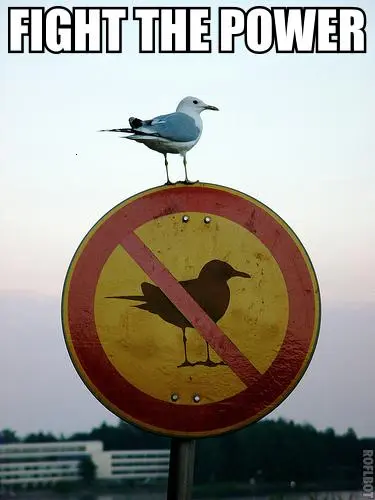
To know whether any act of prudence or decorum is a feather in one’s cap is first to answer to what end and on whose behalf.
Examples:
Both are often invoked in the context of potential loss to those who have the most to lose.
Self preservation is prudent. Prudence avoids loss of face …of social standing …of strategic advantage, and so forth.
Decorum avoids offending traditional sensibilities …protects what is sacred …retains political capital …maintains institutional legitimacy.
So both tend to be elevated as lofty virtues by those with power and authority to lose.
Anyway I used to think similarly. What disabused me of my regard for such ideals was living among those who prudence and decorum never served.
Was Mork attempting a surprised German, an elderly Japanese man, or some strange third thing?

This deal is getting worse all the time.

I guess that wouldn’t sell in today’s news climate.
deleted by creator
She’s always been such an action hero. Even now as the conservatives are emboldened. Tell me who’s gonna lead the god damn revolution.
I think this perception of increased global ignorance may not withstand scrutiny — for starters, global statistics continue to reflect a rise in median education levels over time — but is an increasingly popular intuition that is likely bound to a few adjacent factors, namely:
1. Increased access
Many social spheres have become more inclusive, and perhaps none more-so than those found on the World Wide Web. In other words, you are more likely to encounter ignorance today than 20 years ago not because ignorance is more prevalent, but because those with less education have recently “joined the chat.”
2. Shifting goalposts
What used to be considered minimum required knowledge in a particular era, WRT a particular domain, is now considered insufficient if not obsolete. The most obvious examples relate to Information Age technologies, but include important changes in the realms of finance, climate, economics, and social theory.
3. Expanded range of lifetime education
Measured in years, there is now a much greater spread between groups with “low” versus “high” education rates. This just means the potential difference in those who know more or less is greater, which can easily lead to a perceived decline in knowledge, critical thinking, etc.
Whether more localized or transient effects may trend in the future due to historic shifts in education policy (or technology like LLMs) is yet to be seen. But there is little evidence to suggest that we are witnessing either the end of a golden age of free thought or the beginning of a dark age of ignorance and intellectual atrophy.